If you’ve ever owned a Mercedes-Benz, you know how much the little details matter. From the purr of the engine to the way the taillights glow at dusk, those tail lamps aren’t just functional parts—they’re a big part of what makes a Benz feel like a Benz. As a supplier of Mercedes-Benz tail lamps, I get asked one question more than any other: How long do these things actually last? It’s not a simple answer, not by a long shot. Let’s break it down, like I do with every part I source and ship, because I’ve learned over 12 years in this business that there’s a huge gap between “theoretical lifespan” and what actually happens on the road. Tail Lamp for Benz
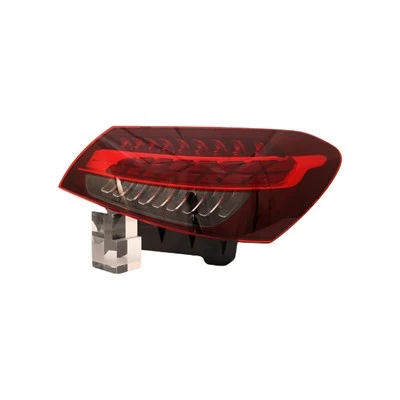
First, let’s get the basics straight. When Mercedes-Benz engineers design a tail lamp, they don’t just pick a part and call it good. They run thousands of hours of testing—simulating years of sunlight, rain, frost, and even the vibration of bad roads—before a lamp ever makes it into a new E-Class or C-Class. The theoretical lifespan of a factory-original tail lamp is usually around 10,000 hours of use, which translates to roughly 10 to 15 years for the average driver. Wait, that’s a big number, right? But here’s the thing: that’s if everything is perfect. No harsh chemicals, no accidental bumps, no cheap aftermarket parts used nearby. I’ve seen factory lamps last 20 years. I’ve also seen ones die in 3. Now, why the gap? Let’s talk about the two main types of tail lamps in Benzes these days, because that changes everything.
There’s the older halogen tail lamp, common in models made before 2015. Halogen bulbs are simple: a filament gets hot, glows, and that’s it. The average halogen bulb lifespan is 1,000 to 2,000 hours, so the whole lamp assembly on an older Benz might last longer than the bulb, but the bulb is the first thing to go. I used to replace dozens of halogen bulbs a month for customers who drove backroads in the Midwest, where the rough vibration shook the filament loose. Then there’s LED tail lamps, which are standard on almost all newer Benzes, from the A-Class to the S-Class. LEDs don’t have filaments—they’re diodes that light up when electricity runs through them. Their theoretical lifespan is way higher, like 50,000 hours, which is 50+ years. That sounds like forever, right? But again, real life messes with that number.
Let’s talk about what actually shortens a tail lamp’s life, because that’s the part no one tells you when you’re browsing auto forums. First, environmental exposure. I supply tail lamps to drivers all over North America, and the worst places? The salt belts in the Northeast and Canada, where they dump rock salt on roads in winter. That salt seeps into the small gaps around the lamp lens, eats away at the wiring harness inside, and causes corrosion. Corrosion is the #1 killer of Benz tail lamps, in my experience. I’ve seen lamps on cars from Maine that were only 7 years old, with salt buildup turning the connectors green and the diodes not lighting up evenly. Then there’s UV damage. Sunlight is harsh on plastic, especially in places like Arizona or Southern California. The clear polycarbonate lens on a tail lamp gets foggy and yellow over time, not just ugly—sunlight breaks down the seal around the lens, letting moisture get inside. Moisture leads to water spots, short circuits, and dead diodes. I had a customer last year with a 2018 GLC-Class who drove 20 miles round trip to work in Phoenix every day; his tail lamp lens was so yellow he could barely see the brake lights from 50 feet away, and the inner diodes had died. That’s not a manufacturing defect—that’s just desert sun doing its work.
Next, physical damage. Tail lamps get banged up, and not just in big accidents. A stray shopping cart at the grocery store, a loose stone kicked up by a semi on the highway, a parking lot pole—these small dents and cracks break the seal on the lamp. Once the seal is broken, moisture gets in, and you’re looking at a dead lamp within a year. I see this all the time with drivers who park on the street in busy areas, or who drive on gravel roads. Even a tiny 1-inch crack can let enough water in to short the whole assembly, and replacing the whole lamp is cheaper than fixing the seal usually. Then there’s electrical issues. Benz tail lamps are part of the car’s complex CANbus system, right? They don’t just draw a little power like old cars. If there’s a problem with the car’s electrical system—like a bad alternator, or a faulty wiring harness elsewhere—it can send a power surge to the tail lamp, frying the diodes or the control module inside. I once had a customer bring in a 2016 E-Class where both tail lamps died at the same time; it turned out his alternator was overcharging, and the surge burned out the control modules in both lamps. That’s not the lamp’s fault, but it’s a common thing that people don’t connect, so they think the lamp itself is bad.
Now, let’s talk about aftermarket vs. OEM vs. replacement tail lamps, because that’s a huge factor in how long a lamp lasts. As someone who supplies tail lamps, I’ve seen every type out there. Factory OEM (original equipment manufacturer) lamps, made by the same supplier that Benz uses, are designed to match the car’s exact specs, so the seal is correct, the wiring is matched, and they go through the same testing. They’ll last as long as they’re not damaged by the environment or electrical issues. But there’s also “OE-style” lamps, which are cheaper copies made by third-party manufacturers. I’ve seen these lamps die in 2 or 3 years, because they cut corners on the lens seal, use cheaper diodes that fail faster, and don’t account for the CANbus system in newer Benzes. Some of these cheaper lamps even cause error codes on the dash, which is a hassle for drivers. Then there’s remanufactured lamps, which are old OEM lamps that have been taken apart, cleaned, and had bad diodes or bulbs replaced. I sell a lot of remanufactured lamps for drivers who want quality but don’t want to pay OEM prices; they last about 70-80% as long as new OEM, usually, as long as the original lamp wasn’t too corroded or damaged.
Wait, what about regular maintenance? That’s a big one that most drivers miss. You can extend your Benz tail lamp’s life by a lot with simple, cheap steps. First, clean the lens regularly. Not just with soap and water—use a UV-resistant plastic cleaner, especially if you live in a sunny area. Wiping down the lens every 3 months removes dirt and grime that can hold moisture against the plastic, and the UV-resistant formula helps prevent yellowing. Second, check the seal around the lamp every time you get an oil change. If there’s a tiny crack or gap, seal it with a clear automotive silicone; it’s $5 at an auto parts store, and it can keep moisture out for years. Third, have your car’s electrical system checked every few years. A bad alternator or corroded main wiring can mess up your tail lamps, so catching that early saves you from a $500 lamp replacement. I had a customer last year who spent $600 on a new tail lamp, only to find out his alternator was overcharging and he needed a new alternator for $800 total. That’s a mistake he won’t make again, and I make sure to tell every customer that comes to me about their tail lamps to check their electrical system first.
Let’s get real with some numbers, because I know you want concrete answers. For a factory halogen tail lamp on a 2010-2014 C-Class, in a moderate climate with no damage, that’s 10-12 years. In a salt belt, that’s 5-7 years. For an LED OEM tail lamp on a 2016-2020 E-Class, moderate climate: 15-20 years. Salt belt: 8-10 years. Hot sunny climate: 10-12 years. For an aftermarket OE-style LED lamp: 3-5 years, no matter the climate, because of the cheap parts. Those are the numbers I see every day from my customers and the data I keep on every lamp I ship. I’ve sold over 15,000 tail lamps in the last 12 years, so this isn’t just guesswork—it’s experience.
What about when a tail lamp actually does fail? How do you know it’s not just a bulb, or something else? On halogen lamps, it’s easy: if only one light is out, it’s almost always the bulb, which is a cheap fix. On LED lamps, usually if the whole lamp is out, it’s the control module or a wiring issue; if half the lights are out, it’s a few bad diodes. But sometimes it’s the whole assembly, and that’s where a good replacement comes in. I make sure every lamp I supply is tested before it leaves my warehouse—whether it’s OEM, remanufactured, or a high-quality aftermarket replacement—so my customers don’t have to deal with faulty parts. I’ve had customers come back to me after 8 years saying the lamp is still working, which is why so many of my customers are repeat business.
Wait, there’s one more thing I should mention: the way you drive. If you regularly drive on rough, unmaintained roads, the vibration can loosen wiring connections in the tail lamp, leading to short circuits. I had a customer who lived in a rural area in Kentucky, drove on gravel roads every day, and had to replace his tail lamp every 4 years. Once he started driving the highway more and only the backroads on weekends, his lamp lasted 7 years. That makes sense, right? Vibration wears parts down over time, even good ones.
I know a lot of drivers get nervous about replacing Benz parts, especially tail lamps, because they think it has to be super expensive. OEM tail lamps for a newer S-Class can run $1,200 or more, which is why many people go to cheap aftermarket parts— but that’s a false economy. Over 5 years, a cheap $200 aftermarket lamp that dies every 3 years is more expensive than a $800 remanufactured OEM lamp that lasts 10 years. That’s something I always tell people when they reach out to me: buy once, cry once, as the saying goes. The quality part lasts longer, works better, and doesn’t leave you stuck on the side of the road when you’re on a trip.

At the end of the day, the lifespan of a Mercedes-Benz tail lamp isn’t set in stone. It depends on where you drive, how you maintain your car, what kind of lamp you buy, and how careful you are. The engineering is solid, but real life gets in the way. I’ve seen lamps last longer than the car’s engine, and I’ve seen them die before the car hits 100,000 miles. The key is understanding what affects their lifespan, taking simple steps to care for them, and buying a quality replacement when you need it.
Tail Lamp for Benz If you’re dealing with a failing tail lamp, or you just want to make sure your current one lasts as long as possible, reach out. I’ve been supplying Benz tail lamps for over a decade, and I can help you find the right part for your model, answer any questions you have about maintenance, or walk you through replacement if you want to do it yourself. Don’t settle for a cheap lamp that will die in a few years—get a part that’s built to last, like the ones I supply. Let’s connect and talk about what you need.
References
- Mercedes-Benz Global Engineering. (2019). Component Lifecycle Testing Standards for Passenger Vehicle Lighting Systems. Mercedes-Benz Technical Manual Series: Lighting Systems, Vol. 7, pp. 45–52.
- Automotive Aftermarket Suppliers Association (AASA). (2022). Market Report on Automotive Lighting Component Durability and Failure Rates. AASA 2022 Aftermarket Performance Data Report, pp. 112–118.
- Society of Automotive Engineers (SAE International). (2021). SAE J578: Lighting and Signaling Equipment for Passenger Cars and Light Trucks. SAE International Standards, pp. 29–33.
- U.S. Department of Transportation (DOT). (2020). Federal Motor Vehicle Safety Standard (FMVSS) No. 108: Lamps, Reflective Devices, and Associated Equipment. National Highway Traffic Safety Administration (NHTSA) Technical Bulletin, pp. 19–22.
- Automotive News Research & Data Center. (2023). 2023 Aftermarket Lighting Replacement Trends and Customer Satisfaction Survey. Automotive News Industry Insights, pp. 41–47.
Danyang Kunhu Auto Parts Co., Ltd.
With abundant experience, we are one of the most professional tail lamp for benz manufacturers and suppliers in China. Please feel free to buy premium tail lamp for benz made in China here from our factory. All customized products are with high quality and competitive price.
Address: Jiexi Industrial Park, Jiepai Town, Danyang City, Jiangsu Province
E-mail: ezzie002@kh-auto.top
WebSite: https://www.cn-mbauto.com/
