As a supplier of control cables, I’ve been deeply involved in the industry for many years. Throughout my journey, one concept that continuously stands out as both crucial and intricate is the electromagnetic compatibility (EMC) of control cables. In this blog post, I aim to explain what electromagnetic compatibility of control cables means, why it’s so important, and how we, as suppliers, ensure our products meet the highest EMC standards. Control Cables
Defining Electromagnetic Compatibility
Electromagnetic compatibility refers to the ability of an electrical or electronic system to function correctly in its electromagnetic environment without causing unacceptable electromagnetic interference to other systems in that same environment. In the context of control cables, which are used to transmit control signals in various electrical systems, maintaining EMC is of utmost importance.
Control cables are often laid in environments where they are exposed to a variety of electromagnetic fields generated by other electrical equipment. These fields can be in the form of radio – frequency emissions, electrostatic discharges (ESD), or conducted electromagnetic interference. For example, in an industrial setting, motors, generators, and switchgear can produce significant electromagnetic noise. If a control cable lacks proper EMC, it may pick up this noise, leading to distorted or corrupted signals. As a result, the control systems relying on these signals may malfunction, causing serious disruptions in the operation of machinery or even posing safety risks.
Sources of Electromagnetic Interference (EMI)
There are two main categories of EMI sources that control cables need to deal with: internal and external sources.
Internal Sources
Internal sources of EMI are generated within the electrical system itself. Unshielded or poorly shielded electrical components, loose connections, and power supply fluctuations can all contribute to internal EMI. For instance, a faulty relay in a control panel may generate electrical arcs, which in turn produce high – frequency electromagnetic noise. This noise can then couple into the control cables, affecting the signal integrity.
External Sources
External sources are those outside of the specific electrical system. Radio stations, mobile phones, and lightning strikes are all examples of external EMI sources. In industrial areas, nearby high – voltage power lines can induce unwanted currents in control cables through electromagnetic induction. These induced currents can interfere with the control signals being transmitted, leading to errors in the control systems.
Importance of EMC in Control Cables
The importance of EMC in control cables cannot be overstated. Here are some key reasons why it is so crucial:
Reliability
In any electrical or electronic system, reliability is paramount. Control cables are the lifelines of many control systems, carrying the signals that regulate the operation of machinery. If these signals are corrupted due to EMI, the machinery may not function as intended. For example, in a manufacturing plant, a control cable that is susceptible to EMI may cause a robotic arm to move incorrectly, leading to production defects or even equipment damage. By ensuring high EMC, we can enhance the reliability of the control systems and minimize downtime.
Safety
Safety is another critical aspect. In applications such as power plants, transportation systems, and medical equipment, the proper functioning of control systems is directly related to safety. A control cable with poor EMC may cause a control system to malfunction, which could result in serious accidents. For instance, in an aircraft, a faulty control signal due to EMI could affect the flight control systems, endangering the lives of passengers and crew.
Compliance
Many industries are subject to strict electromagnetic compatibility standards and regulations. For example, the European Union has the EMC Directive, which sets out the requirements for electrical and electronic equipment to ensure that it can operate without causing excessive electromagnetic interference. In the United States, the Federal Communications Commission (FCC) has similar regulations. As a control cable supplier, it is our responsibility to ensure that our products comply with these standards. Non – compliance can lead to legal issues and loss of market access.
How We Ensure EMC in Our Control Cables
As a reliable control cable supplier, we take several measures to ensure the electromagnetic compatibility of our products.
Shielding
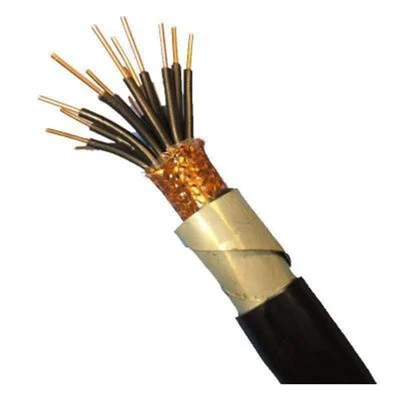
One of the most effective ways to protect control cables from EMI is through shielding. We use different types of shielding materials, such as copper foil, braided copper, or aluminum – mylar laminate. These shielding materials create a barrier that prevents external electromagnetic fields from entering the cable and internal electromagnetic fields from radiating out. For example, a braided copper shield provides good flexibility and low – frequency shielding effectiveness, while a copper foil shield offers high – frequency shielding.
Twisting of Conductors
Another technique we employ is the twisting of conductors within the cable. When two conductors are twisted together, the electromagnetic fields generated by the currents in the conductors cancel each other out to a large extent. This reduces the loop area and thus minimizes the inductive coupling between the conductors and external electromagnetic fields. Additionally, twisting helps to balance the interference induced in the two conductors, making it easier to cancel out the unwanted signals at the receiving end.
Selection of High – Quality Materials
The choice of materials is also crucial in ensuring EMC. We use high – quality insulation materials that have good dielectric properties. These materials help to reduce the capacitance between the conductors and minimize the leakage of electrical signals. Moreover, we ensure that the conductors have low resistance to reduce the power losses due to conduction and minimize the generation of internal EMI.
Testing and Certification
We subject our control cables to rigorous testing to ensure their EMC performance. We use specialized test equipment, such as spectrum analyzers and electromagnetic shielded chambers, to measure the electromagnetic emissions of the cables and their susceptibility to external interference. Our cables are also certified by independent testing laboratories to comply with international EMC standards, such as IEC 61000 and CISPR 22.
Conclusion
In conclusion, electromagnetic compatibility is a vital aspect of control cables. It ensures the reliable and safe operation of control systems, and compliance with industry standards. As a control cable supplier, we are committed to providing high – quality cables with excellent EMC performance. By using advanced shielding, twisting techniques, high – quality materials, and thorough testing, we guarantee that our cables can withstand the challenges of the electromagnetic environment.
Control Cables If you are in need of control cables with superior electromagnetic compatibility, I encourage you to reach out to us for procurement and further discussions. We are confident that our products will meet your requirements and contribute to the success of your electrical systems.
References
- International Electrotechnical Commission (IEC). IEC 61000 series standards for electromagnetic compatibility.
- International Special Committee on Radio Interference (CISPR). CISPR 22 standard for information technology equipment – radio disturbance characteristics – limits and methods of measurement.
- Paul, Clayton R. "Electromagnetic Compatibility for Engineers". Wiley, 2006.
Anhui Yuantong Cable Co., Ltd.
As one of the most professional control cables manufacturers and suppliers in China, we offer a wide range of cables with superior quality. Please feel free to wholesale bulk customized control cables from our factory. Also, pricelist is available.
Address: Yongfeng Industrial Park, Tianchang City, Anhui Province
E-mail: ahytcable@126.com
WebSite: https://www.yuantongcable.net/
