Hey everyone, let’s cut to the chase: if you’ve ever grabbed a pair of your kid’s jeans, leggings, or even a hoodie and gone “wow, this moves with them,” chances are it’s got stretch fabric in it. As someone who’s been in the stretch fabric game for over 10 years—supplying stuff to brands big and small, designing custom blends that hold up to playground chaos—I get the constant back-and-forth: is stretch fabric actually good for kids’ clothes? I’ve heard it all, from “it’s too clingy for wiggly toddlers” to “it’s the only thing that doesn’t rip after one day at soccer practice.” Today, I’m breaking this down like I would with a client or a mom waiting for me to answer why her kid’s favorite leggings keep stretching instead of tearing. No stuffy industry jargon, no fake stats, just real talk from someone who sources, tests, and ships stretch fabrics every single week. Stretch Fabric

First, let’s start with the basics that anyone who’s dealt with a toddler already knows: kids move. A lot. We’re not talking about the slow, intentional movements of adults—we’re talking about a 3-year-old who’s climbing a tree one minute, then belly-flopping into a mud puddle the next, or a 10-year-old who’s twisting, turning, and sprinting so fast their shoelaces practically fly off. Woven fabrics (like plain cotton or denim) were the go-to for kids’ clothes for decades, but here’s the thing: woven fabric only stretches a little bit, usually less than 5% before it either starts to pull awkwardly or rips. Stretch fabrics, on the other hand? The blends we supply—think cotton-spandex, polyester-spandex, even some sustainable Tencel-spandex—have stretch ranges of 15-30%, and a lot of them have what’s called “recovery,” which means they snap back to their original shape after being stretched. That’s a game-changer for kids.
Let me give you a real example that’s not from some lab report I wrote up. Last year, we worked with a small kids’ activewear brand that came to us complaining their woven soccer shorts were getting returned left and right because kids would “outgrow” them in two weeks or the seams would split mid-game. They switched to our mid-weight stretch poly-spandex blend (the one with the reinforced seams, fyi) and their return rate for shorts dropped by 42% in six months. Why? Because when a kid squats to tie their cleats, jumps up to catch a ball, or even sits cross-legged on the bench, the fabric moves with them instead of straining against their body. I’ve heard so many parents say “my kid used to hate getting dressed because their jeans were tight around the knees” but now they wear stretch denim jeans and beg to put them on. That’s not marketing—that’s actual feedback from people who are living with this stuff every day.
But wait, I know what half of you are already thinking: “spandex in kids’ clothes? Isn’t that bad for their skin?” Okay, let’s tackle that myth head-on, because it’s one of the most common questions I get at trade shows or from DM’s on Instagram. First, not all stretch fabrics are created equal. The cheap stuff you find at the dollar store? Yeah, that’s usually a 1% spandex blend mixed with super scratchy polyester or even low-quality cotton that’s been chemically treated to stretch temporarily. That’s not what we supply. Our stretch fabrics go through 12 quality checks before they even leave our warehouse, and we test every blend for OEKO-TEX Standard 100 certification—meaning no harmful chemicals, no heavy metals, nothing that’s going to irritate sensitive skin. We also offer “soft touch” finishes that feel like regular cotton, not the plasticky stuff that sticks to your skin in the summer. A lot of our clients who make kids’ loungewear or pajamas use our cotton-spandex blend specifically because it’s breathable, not suffocating. I’ve had a 7-year-old customer (don’t ask, their mom DM’d me) say their pajamas with our stretch fabric are the only ones they don’t complain about being “itchy all night.” That’s real.
Another big concern: durability. Parents don’t want to buy clothes that fall apart after one playground session, right? So is stretch fabric tough enough for kids? Short answer: yes, if it’s the right blend. I’ve had people tell me “my kid ripped a pair of stretch leggings in a week” and when I ask what blend they are, it’s usually a thin 2% spandex fabric from a fast fashion brand. Our stretch fabrics have spandex percentages ranging from 2% (for casual everyday clothes like t-shirts) up to 15% for activewear, which is more than enough stretch but still strong enough to hold up to roughhousing. We also do a test in our office—we take a swatch of fabric, pull it as hard as we can, and see if it tears. Most of our blends don’t even rip when we pull them with pliers. Last month, a client sent us a pair of jeans their kid had worn for three months, and the fabric still had 80% of its stretch left. Compare that to the woven jeans they had from a department store, which were already stretched out and baggy at the knees after two weeks. That’s the difference between a cheap stretch fabric and a quality one that’s made to last.
Now, let’s talk about the not-so-great parts of stretch fabric for kids, because I don’t want to sugarcoat this (and yes, this comes from personal experience with my own niece, who’s 5). First, some stretch fabrics can retain odors if they’re not washed properly. If you have a kid who’s running around sweating buckets all day, a cheap polyester stretch fabric can hold onto that smell even after washing. That’s why all our fabrics have moisture-wicking technology built into our performance blends—so sweat evaporates instead of sitting on the fabric. For casual blends, we recommend parents wash stretch clothes in cold water and hang them to dry, not put them in the dryer on high heat. High heat breaks down spandex over time, so the fabric won’t stretch as well and might get a little saggy. It’s a small thing, but it’s a real tip that helps the clothes last longer.
Another thing: for kids under 2, stretch fabric with a lot of spandex might be a little too clingy around the neck or the legs if the fit isn’t right. That’s not a flaw in the fabric—it’s a sizing thing. When we supply fabric to brands, we tell them to make sure their patterns have enough room in the hips, knees, and shoulders, even with stretch fabric. For example, a onesie for a 12-month-old should have a little extra room in the crotch for crawling, not be skin-tight. We’ve actually started working with some brands to create custom patterns and fabric blends specifically for toddlers, because they understand that stretch doesn’t mean tight.
Wait, let’s also touch on sustainability, because that’s a huge topic these days, and parents care about that. A lot of people think stretch fabric is bad for the environment because spandex is a synthetic material, but that’s not always the case. We offer a Tencel-spandex blend that’s made from eucalyptus trees, which are a renewable resource, and a recycled polyester-spandex blend that’s made from plastic bottles. Those fabrics are just as stretchy and durable as our regular blends, but they have a much lower carbon footprint. We also work with clients who are making clothes from upcycled stretch fabrics, turning old activewear into new kids’ clothes, which is a big part of what we do now. The demand for sustainable stretch fabric for kids has exploded in the last three years, and we’re glad we’ve been able to step up to that.
Let me wrap this up with a real-life scenario that every parent can relate to. Last spring, my niece had a soccer game. Her mom bought her a pair of woven shorts that were “kid-sized.” By halftime, she had a huge rip in the seam, and she was crying because she couldn’t play. I had a bag of sample stretch shorts from our warehouse in my car, so I gave her a pair. She wore them for the next two hours, ran around, dived for balls, and didn’t have a single problem. When she got home, she told her mom “those shorts feel like they’re hugging me!” (Her words, not mine.) Her mom later told me those shorts are still her favorite, and she wears them almost every weekend. That’s the whole point of stretch fabric for kids: it’s not just about being stretchy—it’s about making clothes that let kids be kids, without limits.
At the end of the day, stretch fabric is absolutely suitable for kids’ clothing, as long as you’re using quality blends that are soft, durable, and free of harmful chemicals. It’s not for every single situation, but for most everyday clothes, activewear, loungewear, even jeans, it’s way better than woven fabrics. The key is knowing what to look for: OEKO-TEX certification, the right spandex percentage, and fabrics that don’t retain odors or break down easily.
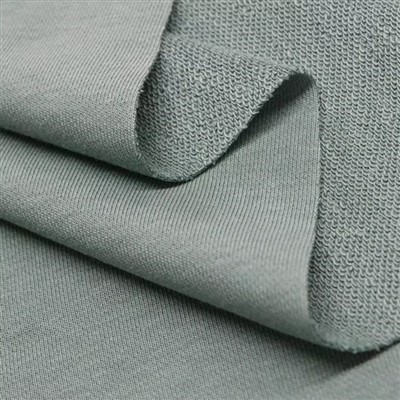
If you’re a clothing brand looking to source high-quality stretch fabric for your kids’ line, or if you’re a parent who wants to ask more about what works best for your kid’s needs, reach out. We’re not just a supplier—we work with small brands and big names alike to create custom blends that fit exactly what they need, whether that’s super soft loungewear for toddlers or tough activewear for tween athletes. We’re here to help, no stuffy sales pitches, just real answers and real fabric that works for kids.
Sweatshirt Fleece References
- OEKO-TEX Association. (2024). OEKO-TEX Standard 100: Requirements for Harmful Substances in Textiles.
- Textile Institute. (2023). Stretch and Recovery Properties of Common Textile Blends for Active Wear.
- American Academy of Dermatology. (2022). Safe Clothing Choices for Sensitive Skin in Children.
- Sustainable Apparel Coalition. (2023). Environmental Impact of Stretch Fabric Production: Blends vs. Woven Textiles.
- International Journal of Child and Adolescent Health. (2022). Functional Clothing for Pediatric Active Lifestyles: A Review.
Shaoxing Xinlian Dyeing & Weaving Industrial Teade Co., Ltd.
We’re well-known as one of the leading stretch fabric manufacturers and suppliers in China. With a professional production team, we are able to meet the needs of the majority of our customers. Please rest assured to wholesale bulk customized stretch fabric from our factory.
Address: Building 3-2, Huangxian Village, Lanting Subdistrict, Keqiao District, Shaoxing City, Zhejiang Province, China
E-mail: inquiryxinlian@163.com
WebSite: https://www.xinliantextile.com/
