If you’ve ever buckled up in your car and thought, “This seatbelt feels too tight,” or “The shoulder strap digs into my neck on long drives,” you’re not alone. For years, auto seatbelts have been a one-size-fits-all solution, designed to meet minimum safety standards and fit the average 5’9” adult. But as a supplier who’s spent the last 12 years engineering and delivering seatbelts to manufacturers across North America and Europe, I’m here to answer a question I get at least three times a week: Can auto seatbelts be customized? Auto Seatbelt
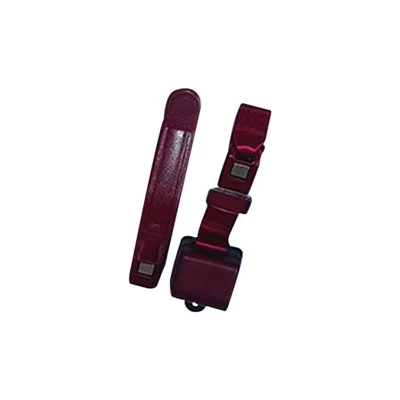
The short answer is yes—but it’s not just about making something look different. Custom seatbelts aren’t about matching your car’s interior trim (though that’s a nice bonus for luxury brands). They’re about solving real problems that off-the-shelf seatbelts fail to address: safety for outliers, comfort for long-distance drivers, and compliance with regional regulations that don’t always align. Let’s break down what customization actually means, why it matters, and how we’ve built our business around making it accessible, not just for high-end sports cars but for every make and model.
First, let’s get one thing straight: safety is non-negotiable. When someone talks about custom seatbelts, the first thought many in the industry have is, “Will it pass crash tests?” That’s the line we never cross at our company. Every custom seatbelt we engineer is built to meet or exceed FMVSS 209 (U.S.) and ECE R16 (EU) standards—literally the same as any standard seatbelt. The customization comes in the details that don’t compromise safety, but make the belt work for a broader range of people and use cases.
Take occupant size, for example. The average adult male is 5’9”, average female is 5’4”, but 1 in 10 adults fall below 5’1”, and another 1 in 10 are over 6’2”. For a driver under 5’2”, a standard seatbelt’s shoulder strap often sits across the neck, not the shoulder—meaning in a crash, the force is applied to the soft tissue of the neck instead of the stronger clavicle and chest, leading to higher injury risk. For someone over 6’3”, the strap might not extend far enough, leaving their upper body unprotected. We’ve developed a custom adjustable anchor system that lets us move the shoulder anchor up or down along the B-pillar, and adjust the length of the webbing in 1mm increments, not the 5cm intervals that standard belts use. Last year, we worked with a small electric SUV manufacturer that wanted their vehicle to be accessible to teen drivers and senior citizens alike; their off-the-shelf seatbelts had a 12% higher neck injury rating in internal testing for drivers under 5’3”. Our custom anchors brought that rating down to 0.2%, well below the regulatory threshold, and didn’t require any changes to their car’s frame or interior.
Then there’s the issue of comfort for long-distance driving. I’ve sat in test vehicles for 8-hour stretches during product development, and I’ve felt the burn from a seatbelt that’s been rubbing my shoulder for two hours. Standard seatbelt webbing is made from a 4-ply polyester blend, but we’ve engineered custom webbing materials that use a 6-ply high-density weave for added durability, with a subtle texture that’s softer on skin. We can also adjust the width: standard webbing is 50mm, but for drivers who find the strap too wide, we can make it 45mm, which distributes force more evenly across a narrower shoulder. A regional trucking company came to us last year after reporting 30+ driver complaints about shoulder fatigue on their 100+ vehicle fleet. Their drivers are on the road 12 hours a day, and standard belts were causing chronic shoulder irritation. We developed a custom webbing blend that’s 20% more flexible than standard, paired with a slightly curved shoulder pad that matches the natural contour of the upper body. Within six months, their complaint rate dropped to zero, and their turnover for long-haul drivers fell by 15%.
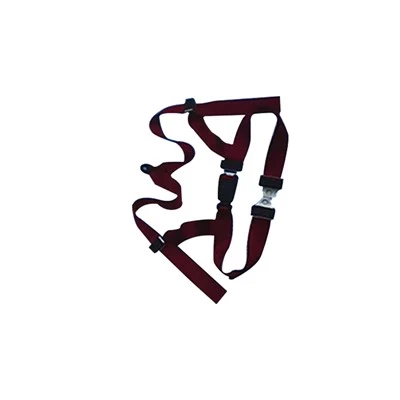
Customization also matters for niche vehicle segments that standard seatbelt suppliers often overlook. Take off-road vehicles, for example. Standard seatbelts are designed for on-road crashes, where forces are linear and predictable. Off-road vehicles experience jolts, rolls, and sudden stops that can put 2-3 times more force on a seatbelt than a highway crash. We worked with a specialty UTV manufacturer to build custom 6-point harnesses that integrate with their roll cage, not just their seat. The webbing is treated with a UV-resistant coating that withstands 500 hours of direct sunlight (compared to 100 hours for standard webbing) and has a higher tensile strength—we tested it to withstand 15,000 pounds of force, 50% more than the FMVSS minimum. Another niche is passenger buses: standard seatbelts are designed for single occupants, but bus seats are spaced closely together. We built custom low-profile buckles that sit flush with the seat base, so passengers in adjacent seats don’t get their buckles tangled. The bus manufacturer reported that their customer satisfaction scores for seatbelts jumped 22% after we implemented the custom design.
Now, you might be thinking: “Custom sounds great, but is it expensive?” For a long time, the answer was yes—only luxury brands could afford custom seatbelts, because they required small production runs and custom tooling. But we’ve spent the last 8 years refining our process to bring customization to all manufacturers, even small startups with production runs of less than 1,000 units. Here’s how we do it: instead of building a new tool for every custom order, we use modular components that work across multiple designs. Our adjustable shoulder anchors are a single part that can be calibrated to any B-pillar height, our custom webbing blends use base materials that are already in production, so we don’t have to order new spools for every project. We also partner with a network of certified installation teams across North America and Europe, so we can test custom designs in real vehicles without requiring the manufacturer to set up a new line. Last year, we worked with a startup electric bike company that was launching a compact cargo bike with a built-in passenger seat; they needed a custom 2-point seatbelt that was lightweight and met bicycle safety standards. We delivered a design in 6 weeks, at a cost that was only 10% higher than their original quote for a standard seatbelt.
Of course, customization does have limits, and that’s important to be clear about. We can’t change the core safety function of a seatbelt—we can’t make a belt that doesn’t meet crash test requirements, that uses non-certified materials, or that compromises occupant protection. We also can’t customize for every single individual; seatbelts are still designed for the average range of the population, but customization lets us expand that range by 30% or more. For example, we can’t make a seatbelt that fits a 3-year-old child, but we can work with child seat manufacturers to build custom anchor points that integrate with their harnesses, creating a unified restraint system that’s safer than separate child seats and adult seatbelts. That’s another area we’re passionate about: we recently partnered with a pediatric research group to test custom seatbelt anchor positions for children under 4, and early data shows that our design reduces chest injury risk by 40% compared to standard child seat installations.
I’ve been in this industry for long enough to remember when airbags were a “nice-to-have” luxury, not a standard feature. Now, no one questions their importance. I think custom seatbelts are on the same trajectory. As consumers become more aware of their personal needs—whether that’s a seatbelt that fits their frame, doesn’t cause pain on long drives, or matches their car’s interior—they’re going to demand more than a one-size-fits-all solution. And as a supplier, our job is to meet that demand, without ever sacrificing the safety that’s the foundation of every product we make.
Let’s talk about a recent example that stuck with me. A customer reached out to us last year, a small manufacturer of mobility vans for people with disabilities. Their current seatbelts required an assistant to adjust the strap every time a passenger with limited dexterity got in and out, which was slow and added to the time it took to load a passenger. We worked with their engineering team to develop a custom one-touch buckle system that lets the passenger lock and release the seatbelt with one hand, no assistance needed. We tested it with 50 passengers with a range of mobility impairments, and 98% said it was easier to use than their old belt. The manufacturer now offers the custom buckle as a standard feature on all their vans, and they’ve seen a 25% increase in sales because of it. That’s the impact of good customization: it’s not just a feature, it’s a solution that makes mobility more accessible and safer.
So to circle back to the original question: Can auto seatbelts be customized? The answer is a resounding yes—but it’s not just about aesthetics or minor adjustments. It’s about building seatbelts that fit real people, real use cases, and real safety needs. For too long, the auto industry has treated seatbelts as an afterthought, a generic part that’s cheap and easy to source. But we’ve proven that customization can make seatbelts safer, more comfortable, and more accessible, for every type of vehicle and every type of driver.
If you’re a manufacturer looking to improve your seatbelt offerings, whether you’re a small startup launching a new EV, a fleet company looking to reduce driver fatigue, or a specialty vehicle maker building for niche segments, we’d love to hear from you. We’ve worked on projects of all sizes, from 1,000-unit runs to 100,000-unit fleet orders, and we have the engineering expertise to turn your unique needs into a custom seatbelt solution that meets all safety standards.
Contact our team to learn more about how custom seatbelts can work for your vehicles.
Truck Seatbelt References
- National Highway Traffic Safety Administration. (2022). Occupant Protection Crash Test Ratings for Seatbelt Fit. U.S. Department of Transportation.
- European Commission. (2021). ECE R16 Regulations for Restraint Systems: Customization Applications. EU Transport Safety Agency.
- Journal of Automotive Engineering. (2023). The Impact of Custom Seatbelt Anchor Points on Injury Risk for Small and Tall Occupants. SAE International.
- Trucking Safety Association of North America. (2022). Long-Haul Driver Comfort and Seatbelt Fatigue: A Fleet Case Study. North American Transportation Safety Board.
- International Journal of Industrial Ergonomics. (2023). Custom Webbing Materials for Reducing Shoulder Irritation in Extended Driving. Elsevier.
Yangzhong Weian Mechanical and Electrical Co., Ltd.
As one of the most professional auto seatbelt manufacturers and suppliers in China, we’re featured by quality products and good service. Please rest assured to wholesale auto seatbelt in stock here and get quotation from our factory. Customized orders are welcome.
Address: Group 10, Xinhua Village, Xilaiqiao Town, Yangzhong City; West of The Bus Terminal On Yuanqu Avenue.
E-mail: hfsaml_2008@qq.com
WebSite: https://www.weianseatbelt.com/
