Hey there! I’m a supplier of Collaborative Palletizing Robots, and today I wanna chat about the installation space requirements for these nifty machines. Collaborative Palletizing Robot

First off, let me give you a bit of background. Collaborative palletizing robots are super useful in warehouses and factories. They can work alongside human workers safely, helping to stack and organize pallets efficiently. But before you can start reaping the benefits of these robots, you need to make sure you have the right space for them.
Overall Space Considerations
The amount of space you need for a collaborative palletizing robot depends on a few key factors. One of the biggest factors is the size of the robot itself. Different models come in various sizes, and you gotta pick one that fits your available space.
Let’s start with the footprint. The footprint is the area on the floor that the robot takes up. You need to measure this carefully because it’ll determine where you can place the robot in your facility. A smaller robot might have a footprint of around 1 – 2 square meters, while larger models could take up 3 – 4 square meters or more.
But it’s not just about the footprint. You also need to consider the reach of the robot’s arm. The reach is how far the robot can extend its arm to pick up and place items on the pallet. A robot with a longer reach will need more space around it to operate safely. You don’t want the robot’s arm to hit any walls, equipment, or people while it’s working.
Another thing to think about is the height of the space. Collaborative palletizing robots need enough vertical space to stack pallets. If you’re planning to stack pallets high, you’ll need a taller ceiling. Most robots can stack pallets up to 2 – 3 meters high, so make sure your facility has enough clearance.
Clearance Around the Robot
In addition to the actual space the robot takes up, you need to leave some clearance around it. This clearance is important for a few reasons. First, it gives the robot room to move its arm freely without hitting anything. Second, it allows human workers to access the robot for maintenance, programming, and other tasks.
A good rule of thumb is to leave at least 1 – 1.5 meters of clearance on all sides of the robot. This will give the robot enough space to operate safely and also make it easy for workers to get to the robot when needed.
You also need to consider the space in front of the robot where the pallets will be loaded and unloaded. This area should be clear of any obstacles so that the robot can move the pallets in and out smoothly. You might need to leave an extra 2 – 3 meters of space in front of the robot for this purpose.
Space for the Conveyor System
Many collaborative palletizing robots are used in conjunction with a conveyor system. The conveyor system is used to bring the items to the robot for palletizing. If you’re using a conveyor system, you need to make sure you have enough space for it.
The length of the conveyor system will depend on how many items you need to palletize and how fast you want the process to be. A longer conveyor system can hold more items, but it’ll also take up more space. You’ll need to measure the available space in your facility and decide on the appropriate length of the conveyor system.
You also need to consider the width of the conveyor system. The width should be wide enough to accommodate the items you’re palletizing. Most conveyor systems are around 0.5 – 1 meter wide, but this can vary depending on your specific needs.
Safety Zones
Safety is always a top priority when it comes to using collaborative palletizing robots. That’s why you need to set up safety zones around the robot. These safety zones are areas where human workers are not allowed to enter while the robot is operating.
The size of the safety zone will depend on the speed and reach of the robot. A faster robot with a longer reach will need a larger safety zone. You can use safety fences, light curtains, or other safety devices to mark off the safety zone.
It’s important to make sure that the safety zone is clearly marked and that all workers are aware of the rules. This will help prevent accidents and keep everyone safe in the workplace.
Flexibility in Space Planning
One of the great things about collaborative palletizing robots is their flexibility. They can be easily moved and reconfigured to fit different space requirements. If you need to change the layout of your facility or add more robots in the future, you can do so without too much hassle.
When planning the installation space for your robot, it’s a good idea to leave some extra room for future expansion. This will give you the flexibility to make changes as your business grows.
Conclusion
So, there you have it – the main installation space requirements for a collaborative palletizing robot. As a supplier, I know how important it is to get these details right. If you’re thinking about investing in a collaborative palletizing robot for your business, make sure you take the time to measure your space carefully and plan accordingly.
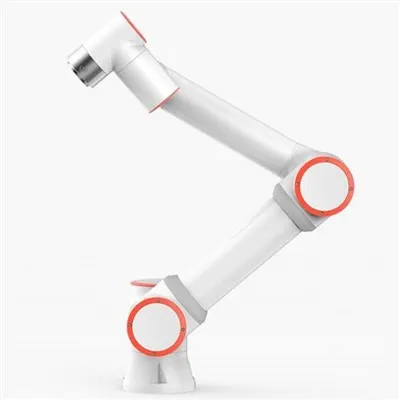
If you have any questions or need more information about the installation space requirements for our robots, don’t hesitate to reach out. We’re here to help you make the right choice for your business and ensure that your robot installation goes smoothly. Just drop us a line and let’s start a conversation about how our collaborative palletizing robots can improve your operations.
Industrial Robot References
- Industry reports on warehouse automation and robotics
- Technical specifications of collaborative palletizing robots
- Safety standards and guidelines for industrial robots
Xinweilai Intelligent Technology (Shandong) Co., Ltd.
As one of the most professional collaborative palletizing robot manufacturers and suppliers in China, we’re featured by quality products and good service. Please rest assured to wholesale bulk customized collaborative palletizing robot from our factory. For pricelist and quotation, contact us now.
Address: Jinghua Road, Economic and Technical Development Zone, Dezhou City, Shandong Province
E-mail: liujiqing@xinweilaiznkj.com
WebSite: https://www.xinweilaiznkj.com/
