Hey there, grinding crew! Let’s cut to the chase—if you’ve ever spent hours dialing in a grinding job, only to end up with parts that are too rough, out of spec, or even cracked, you know it’s not just the wheel grit or coolant that’s messing things up. At the end of the day, the real villain here is often something you can barely feel with your hand on the machine: grinding wheel vibration. As a grinding wheels supplier who’s chatted with hundreds of fabricators, toolmakers, and maintenance techs over the years, I’ve seen vibration turn perfect runs into headaches more times than I can count. Today, we’re gonna break this down like we would over a coffee after a long shift—no stuffy textbooks, just real stuff that actually affects your bottom line. Grinding Wheels
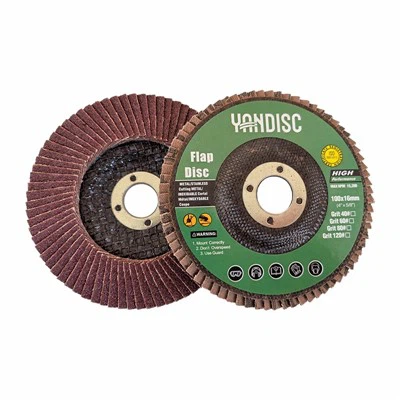
First, let’s keep it simple: what is grinding wheel vibration? You know when your wheel spins and it doesn’t move perfectly smooth? Maybe it’s a tiny wobble you pick up when you spin it by hand, or a high-pitched whine from the grinder mid-job. That’s vibration, plain and simple. It’s not just “noise”—it’s the wheel vibrating at tiny, repeated frequencies, and that movement hits every single part of the grinding process. Let’s start with the big one: surface finish. If your wheel is vibrating, each grit grain isn’t cutting a nice, consistent chip into the workpiece. Instead, it’s skipping, bouncing, and leaving tiny, irregular peaks and valleys. I had a guy last month who makes custom medical parts—he was getting parts that failed surface finish tests by 30% because his wheel was out of balance. He thought it was the coolant until we pulled the wheel off and spun it by hand; there was a 0.2mm wobble no one had noticed. That’s enough to make a part get rejected, scrap material, and waste hours of labor.
But it’s not just rough surfaces. What about dimensional accuracy? If the wheel is vibrating, it’s not making steady contact with the workpiece. One second, it’s pressing down a little too hard, the next it’s bouncing off. Over a long run, that inconsistency adds up. You’ll end up with parts that are slightly tapered, or the diameter’s off at the start vs. the end, or grooves that are uneven. I worked with a tool and die shop a while back that was grinding punch dies—they kept having to rework dies because the vibration made the cutting edge 0.005mm off. Multiply that by 100 dies a week, and that’s thousands in lost parts and rework. Vibration doesn’t just mess up the first part—it ruins batch after batch until you fix it.
Wait, there’s more—grinding wheel lifespan. If you’re running a wheel that’s vibrating, the grit grains are taking way more punishment than they should. They’re not just cutting; they’re banging against the workpiece, chipping or fracturing when they shouldn’t. That means the wheel wears out way faster. I’ve had customers come to me saying a wheel should last 40 parts, but theirs only lasts 15—turns out their grinder’s spindle was worn, causing vibration that was chewing through the wheel. Not only are they buying new wheels more often, but the grit that’s left is uneven, so the performance drops too. It’s a double whammy: more wheel cost, worse quality.
And let’s not forget about machine wear. Vibration doesn’t just affect the wheel and the part—it’s beating up your grinder. All that shaking puts stress on the spindle, the bearings, even the workholding. Over time, that leads to more maintenance, downtime, and even machine replacement. I’ve seen small shops skip checking for vibration because they’re busy, but a $500 vibration check could save them $5,000 in spindle repairs later. It’s like skipping an oil change on your truck—you get away with it for a while, until the engine seizes.
Now, why does a grinding wheel vibrate in the first place? There are a few common culprits, and most are easy to fix if you know what to look for. First, wheel imbalance. That’s the big one—if the wheel isn’t perfectly round, or has uneven weight distribution (like a chunk of bond that’s heavier on one side), it wobbles when it spins. I always tell customers to balance their new wheel before they even put it on the grinder—most of us skip that step, but it takes 5 minutes with a static balancer. Second, improper mounting. If you’re tightening the flange too tight or not evenly, or the collet’s worn, that causes runout (which is just another word for wheel movement). Third, worn machine parts—like I said earlier, a wobbly spindle or loose bearings will make any wheel vibrate, no matter how good it is. Fourth, even the workpiece can cause vibration—if it’s not held tight enough, it’ll shake when the wheel hits it.
Here’s the thing that most people miss: not all vibration is bad. Wait, hear me out—some low-level, controlled vibration is actually part of grinding, especially for certain materials. Like when you’re grinding hard metals or roughing out a part, a tiny bit of vibration can help clear chips so the wheel doesn’t clog. But the key word is controlled. That’s where suppliers like us come in—we make wheels with consistent balance, uniform bond, and roundness so that when you mount and balance them properly, the vibration is at a level that helps, not hurts. I always tell customers that a cheap wheel might look like a good deal, but if it’s not properly manufactured, it’ll have uneven weight, bad roundness, and end up causing more vibration than a high-quality wheel that costs a little more upfront.
Let’s get specific with an example. I had a customer who was grinding stainless steel components for food processing equipment. He was using a cheap wheel from a big box store, and the parts kept getting micro-cracks from vibration. We switched him to our precision-balanced silicon carbide wheel, and after balancing it properly on his grinder, the micro-cracks disappeared. Not only that, the wheel lasted 25% longer, so his wheel cost went down, and his part rejection rate dropped to zero. That’s the kind of win we love to see—vibration fixed, quality up, money saved.
Another thing to think about: when you’re grinding thin or fragile parts, vibration is even more dangerous. A wheel vibrating can flex the workpiece, leading to warping or breakage. I worked with a jewelry manufacturer who was grinding metal settings—their thin gold settings kept breaking because the wheel was vibrating. We recommended a soft bond wheel that’s less prone to vibration, and they also balanced it every time they changed it. Now they get zero broken settings, and their surface finish is way smoother, so their customers are happy.
So what can you do about vibration? First, check for it. Most grinders have a vibration meter, or you can just run your hand lightly over the machine while it’s running (don’t touch the wheel!)—if you feel a noticeable shake, that’s vibration. Second, balance your wheel every time you mount it. Don’t skip this—even new wheels from a good supplier need balancing. Third, check your machine regularly: make sure the spindle isn’t worn, bearings are tight, flanges are in good shape. Fourth, pick the right wheel for the job—not just the grit size, but the bond type, the wheel material, and how it’s manufactured. A grinding wheel supplier who makes precision wheels will help you here, not just sell you the cheapest option.
At the end of the day, vibration isn’t something you have to live with. It’s a fixable issue that affects every part of your grinding process—from the part you make to the money you spend on wheels and machine maintenance. If you’re dealing with rough surfaces, bad dimensional accuracy, short wheel life, or any of the other headaches we talked about, it’s worth taking 10 minutes to check for vibration.

If you’re not sure where to start, or you’ve been dealing with quality issues that you think might be from vibration, hit us up for a chat. We’ve helped hundreds of shops diagnose vibration problems, pick the right wheels, and balance them properly to get better grinding quality and save money. No jargon, no pushy sales stuff—just honest advice from a grinding wheel supplier who’s been in this game long enough to know what works. Don’t let vibration keep you from making the parts you want, and keeping your business running smooth.
Flap Disc References
- Malkin, S., & Guo, C. (2008). Grinding Technology: Theory and Applications of Machining with Abrasives. Industrial Press.
- Shaw, M. C. (1996). Principles of Abrasive Processing. Oxford University Press.
- Stephenson, D. A., & Agapiou, J. S. (2016). Metal Cutting: Theory and Practice (3rd ed.). CRC Press.
- American National Standards Institute. (2018). Safety Requirements for the Construction, Care, and Use of Abrasive Wheels (ANSI B7.1). ANSI.
- Tönshoff, H. K., et al. (2002). Vibration Analysis in Grinding Processes. CIRP Annals – Manufacturing Technology, 51(2), 655-671.
Henan Yandisc Hardware Tools Co., Ltd.
Address: Zinan Road, High-tech Industrial Development Zone, Zhengzhou, Henan, China
E-mail: info@yandisc.com
WebSite: https://www.yandisc.com/
