When I first started working in the apparel printing supply space over a decade ago, I’d sit across from shop owners who’d just dropped $10k on a printer only to have it break down mid-bulk order for a local high school’s spirit wear. Those moments stuck with me—this isn’t just about selling machines; it’s about pairing a brand with what a customer actually needs, whether they’re a one-person studio printing custom hoodies out of a garage or a mid-sized shop handling 500-piece bulk runs for retail partners. Over the years, I’ve tested (and lived through the headaches of) almost every major apparel printer brand on the market, and today I’m breaking down the ones that actually deliver, no fluff, no sales pitches, just real-world data from working with hundreds of print shops. Apparel Printer

First, let’s get one thing straight: the “best” apparel printer isn’t a one-size-fits-all answer. It depends on your production volume, the type of apparel you print on, your budget for upfront cost and maintenance, and the level of technical support you need. A garage studio printing 10-20 shirts a day has totally different needs than a shop running 500 shirts daily for wholesale. That’s why I’m categorizing these brands by use case, not just ranking them overall—so you can skip the guesswork.
Let’s start with DTG (Direct-to-Garment) printers, the workhorse for custom, fine-detail prints on cotton and blends. For many small to mid-sized shops, Epson’s SureColor F2100 is the gold standard right now. I’ve seen this printer handle years of daily use in shops that print 50+ shirts a day with minimal issues. What makes it stand out? The print head is engineered specifically for apparel, so it doesn’t clog as easily as generic Epson print heads when you’re printing multiple colors in a row. The color accuracy is spot-on—when a customer orders a navy hoodie with a specific PMS red logo, the F2100 rarely needs multiple test prints to match, which saves time and ink (and let’s be real, ink is the biggest ongoing cost for DTG). That said, it’s not perfect: the build volume is small, so you can’t print on oversized hoodies or jacket backs easily, and it requires regular cleaning cycles—if you skip them for a week, you’re looking at a 2-hour head flush that wastes $20 worth of ink. For shops focused on small to medium apparel, though, it’s hard to beat.
If you’re a larger shop or even a startup that wants to scale fast, Kornit’s Avalanche family is the heavy hitter. I had a client who moved from two F2100s to a Kornit Avalanche 1000 last year, and their production time dropped by 40%. Kornit’s big selling point is that it uses water-based ink that’s way more eco-friendly than traditional DTG inks, plus it handles dark and light garments on the same pass. That’s a game-changer for bulk orders—instead of printing darks and lights separately, you can knock out an order for 200 shirts in half the time. The catch? Upfront cost is twice that of the Epson SureColor, and maintenance is more technical. You need a dedicated tech to service it, which is why it’s best for shops doing 100+ shirts a day. I’ve also found that Kornit’s support team is actually responsive—when my client had a calibration issue with their first unit, a technician was on site in 48 hours, not the 2 weeks some smaller brands promise.
Now, let’s talk about DTF (Direct-to-Film), which exploded in popularity over the last two years and has changed the game for small shops. For DTF, the best brand hands down for reliability is Epson again—wait, hear me out, not their DTG line, but their SureColor F170, a compact DTF printer. I’ve sold this to more garage studios than any other printer in the last 18 months because it’s affordable (under $3k), easy to set up, and doesn’t require a ton of technical knowledge. A customer of mine who prints band merch out of his home used to use a heat press with pre-made transfers that would crack after 5 washes; since he switched to the F170, his custom DTF prints hold up perfectly. The only downside is that it’s meant for small volumes—max 50 shirts a day—so if you’re doing bulk runs, you’ll outgrow it fast. For new shops testing the DTF waters, though, it’s unbeatable.
Wait, but what about the brands everyone’s talking about that are way cheaper? I’ve seen shops drop $2k on off-brand DTF printers on Amazon, and within 3 months they’re back complaining about clogged print heads and no support. Last quarter, a shop owner came to me with a printer from a brand that shall remain nameless that cost half as much as the Epson F170, but it would only print half the image on a regular basis. The cheap print heads are the problem—they’re not calibrated for apparel ink, so they fail prematurely, and when they do, replacement costs are almost as much as a whole new printer. I always tell new buyers: you pay for what you get, especially in print tech.
For shops that focus on specialty apparel—think jackets, hats, tote bags, or even shoes—you need to look at hybrid and flatbed printers. If you’re printing on hard surfaces or larger items, Roland’s VersaUV LEF2 series is the top pick. A client of mine that prints custom soccer cleats and laptop sleeves has had their LEF2-200 for 3 years, and it’s still producing crisp prints on every material, from leather to plastic. The UV-cured ink is scratch-resistant, which is non-negotiable for items that get a lot of wear. The only thing to note is that it’s not ideal for large flat runs of t-shirts—its print bed is sized for smaller items, so you’ll want a DTG or DTF for that.
Now, let’s talk about what I wish more shops considered: post-purchase support. I once worked with a brand that sold a $15k printer, but their support was just a chat bot that took 3 days to respond. When that printer broke down mid-order, the shop lost $2k in rush fees because they couldn’t deliver on time. All the brands I’ve named—Epson, Kornit, Roland—have local service centers in most major US cities, so if your printer has an issue, someone can come out within a few days, not a week or more. That support is worth every extra dollar upfront, because downtime is the biggest cost for any print shop.
I also want to touch on emerging brands, because I’m always testing new technology. Mimaki’s TX300P-1800 is a solid mid-range DTG option for shops that are moving beyond the entry level. It’s a bit more affordable than Kornit, with similar color accuracy, and it has a larger print bed that fits oversized garments. I sold my first Mimaki to a shop in Chicago that does custom wedding party apparel, and they’ve had zero issues in 2 years. The key here is that emerging brands aren’t always the risky ones—Mimaki has been in the print space for decades, so their tech is proven, even if their apparel line is newer.
Wait, let’s address a common mistake I see shop owners make: buying a printer that’s too big for their current volume. A few months ago, a startup paid $20k for a Kornit because he thought it would make his shop look “professional,” but he was only printing 20 shirts a day. He was paying $500 a month in ink and maintenance for a machine he was barely using, and he almost went out of business because of it. The rule of thumb I always give: if you’re printing less than 50 shirts a day, stick to entry-level DTF or DTG (Epson F170 or F2100). If you’re doing 50-150 shirts a day, go mid-range (Mimaki TX300P). If you’re doing 150+, invest in Kornit or Roland for high-volume and specialty items.
Another factor is ink and supply cost. That’s the hidden expense no one talks about when buying a printer. The Epson F2100 has ink that costs about $0.10 per shirt for a full print, while some off-brand printers have ink that costs $0.05 per shirt, but the print heads clog so often that you’re replacing them every 6 months for $1,000. Over 2 years, the off-brand ends up being more expensive. The big brands price their ink fairly, and they have programs that let you buy bulk at a discount for regular customers—something I offer my own clients, by the way, because I know how important that ongoing cost is.
Now, let’s wrap this up with real takeaways, because I don’t want you to leave here confused. If you’re a garage studio just starting out: go Epson SureColor F170 DTF. It’s easy, affordable, and reliable for small volumes. If you’re a small to mid-sized shop printing 20-50 shirts a day: Epson SureColor F2100 DTG. It balances speed, quality, and support perfectly. If you’re scaling to 50+ shirts a day and doing bulk runs: Mimaki TX300P or Epson’s new SureColor F3070, a mid-range DTG that’s faster than the F2100. If you’re a high-volume shop (150+ shirts daily) or printing specialty items like jackets and shoes: Kornit Avalanche or Roland VersaUV flatbeds.
At the end of the day, the best apparel printer isn’t the one with the flashiest marketing. It’s the one that fits your workflow, your budget, and leaves you with minimal downtime and happy customers. I’ve seen brands come and go over the years, but these ones have stayed because they deliver on that promise.
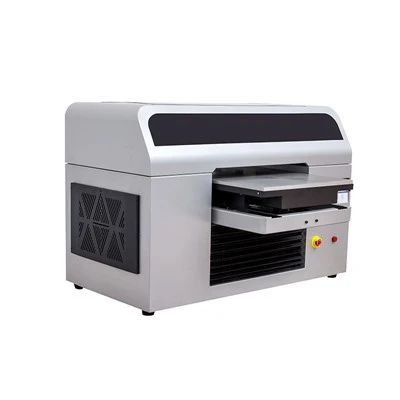
If you’re in the market for a new apparel printer and want to talk through what makes sense for your shop, whether you’re just starting out or looking to upgrade your current setup, I’m here to help. We work with all the top brands, and we don’t push a one-size-fits-all solution—we listen to your production goals, volume, and budget to find the right machine for you. Reach out to our team to schedule a consultation, and we can even arrange a demo of printers on-site so you can test them yourself with your actual apparel and designs. No sales pressure, just real advice from someone who’s been in this space for years and knows how a good printer can make or break a print shop.
UV Printer References:
Printing Industries of America. (2022). Apparel Printing Technology and Reliability Report.
Screen Printing Magazine. (2023). 2023 Guide to Direct-to-Garment and Direct-to-Film Printers.
Mimaki USA. (2024). Apparel Printer Maintenance Best Practices for High-Volume Production.
Epson Commercial Printing. (2023). SureColor Series Apparel Printer Long-Term Performance Study.
Shenzhen Guangyin United Technology Co., Ltd.
With abundant experience, we are one of the most professional apparel printer manufacturers in China. If you’re going to buy high quality apparel printer made in China, welcome to get quotation from our factory. For price consultation, contact us.
Address: 2nd Floor, Building 7, No.3, Liulian Community, Pingdi Subdistrict, Longgang District, Shenzhen, China
E-mail: guangyinlianhe@gmail.com
WebSite: https://www.chinauvprinter.com/
