As a safety clamp supplier, I get this question all the time—from installation teams, plant maintenance leads, and quality control managers across industries like construction, aerospace, and heavy manufacturing. A safety clamp isn’t just a metal piece that holds something tight; it’s the last line of defense when a load slips, a pipe fails, or a component shifts unexpectedly. So testing its functionality isn’t a box-ticking exercise—it’s how you make sure it does the job when it matters most. Over the past 12 years, I’ve worked with thousands of clients to develop their testing protocols, and I’ve seen firsthand that skipping even one step here can lead to catastrophic failures. Today, I’m breaking down exactly how to test a safety clamp’s functionality, the common pitfalls we see suppliers and buyers making, and why partnering with a trusted vendor makes all the difference. Safety Clamp
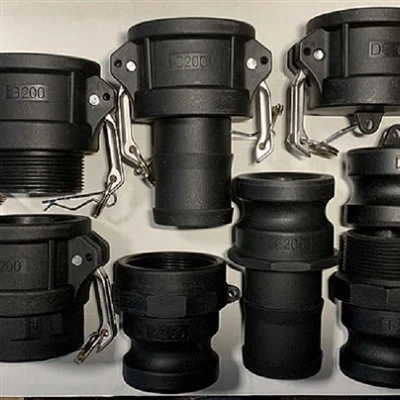
First, let’s start with the basics: what a safety clamp is, and what functionality we’re actually testing. Unlike a standard clamp used for holding parts during machining, a safety clamp is engineered to resist dynamic loads, absorb shock, and maintain its grip even when exposed to extreme conditions. The core functionalities we test fall into four key areas: static load capacity (can it hold the intended weight without slipping or breaking), dynamic load resistance (how it performs when the load moves or vibrates), environmental durability (does it stand up to heat, cold, corrosion, or moisture), and activation/release reliability (can it engage quickly when needed and disengage smoothly for maintenance). If any of these fail, the clamp is useless at best—and dangerous at worst.
Let’s walk through each test step by step, starting with the most fundamental: static load testing. This is the first test we run in our in-house lab for every new clamp design, and it’s non-negotiable. The goal here is to measure the maximum static load the clamp can support for a sustained period without slippage, deformation, or structural failure. How do we do it? First, we mount the clamp to a test rig that replicates the exact surface it will be attached to in the field—whether that’s a steel beam, a concrete wall, or a pipe. We use the correct workpiece material and dimensions specified for the clamp; using a different thickness or material (like testing a pipe clamp on a steel rod) will give you a false result.
Once the clamp is securely installed, we apply incremental loads starting at 50% of the rated capacity, holding each for 10 minutes, then moving up to 75%, 90%, and finally 125% of the rated load. Wait—125%? Yes, because industry standards (like ASME B30 for lifting equipment or OSHA 1926 for construction) require safety clamps to carry 25% more than their advertised capacity to account for unexpected load spikes. We monitor two things during this test: slippage and deformation. Slippage is measured using dial indicators placed on the workpiece and the clamp, with any movement over 0.5 millimeters deemed a failure. Deformation is checked with a laser micrometer; if the clamp’s body bends more than 1% of its original thickness, it won’t be able to engage properly next time, so that’s a fail too.
Last year, we had a client who skipped static load testing on a batch of pipe safety clamps for an offshore oil rig. They thought their in-house “visual check” was enough, but when a pipe surged unexpectedly, the clamps slipped by 2 inches. No one was hurt, but the rig lost $2 million in production time. That’s why our lab performs this test on every single production batch—we test 3 units from each run to ensure consistency, not just a prototype.
Next up: dynamic load testing. Static tests tell you how the clamp acts when the load is steady, but real-world conditions rarely stay still. Heavy machinery vibrates, cranes swing loads, pipes expand and contract with temperature changes—all these forces put repeated stress on the clamp, which is where dynamic testing comes in. The goal here is to simulate 10,000 to 100,000 cycles of dynamic load, depending on the clamp’s intended use (offshore clamps need more cycles than temporary construction clamps).
How do we run this? We mount the clamp to a dynamic test rig that applies a cyclic load matching the operational range of the tool or component. For example, if it’s a safety clamp for a crane hoist, we’ll apply loads that range between 20% and 110% of the rated capacity, simulating the lift, swing, and set-down motion. We run the cycles at a frequency of 1 to 5 Hz (to mimic real operating speeds) and after every 1,000 cycles, we pause to check for slippage, loose fasteners, or micro-deformation. At the end of the full cycle test, we run a final static load test to make sure the clamp still meets its rated capacity.
A common mistake here is under-testing the number of cycles. We once had a aerospace client who wanted to cut their dynamic test time in half to get their product to market faster. We refused, because aerospace safety clamps undergo millions of vibration cycles during flight. Cutting corners there would mean the clamp could fail mid-flight, which is a non-starter for us. That’s why our testing lab is ISO 17025 certified—we follow strict cycle counts and load profiles that align with global industry standards, so you can trust our test results.
Third, environmental durability testing. Safety clamps don’t always work in controlled environments. A clamp on a construction site might be exposed to rain, 100°F heat, or sub-zero temperatures in winter. A clamp on a ship is constantly in saltwater, which causes corrosion. So we test how the clamp performs when exposed to these conditions, because a clamp that works in a lab might seize or corrode in the field.
Environmental testing breaks down into a few key parts. First, corrosion testing: we use a salt spray chamber (per ASTM B117 standards) to expose the clamp to 5% saltwater mist for 1,000 hours, which simulates 5 years of exposure to marine or industrial environments. After that, we run the static and dynamic load tests again to make sure corrosion didn’t weaken the structure or cause the clamping mechanism to stick. Second, temperature testing: we place clamps in a thermal chamber that cycles between -40°F and 180°F for 500 cycles, mimicking extreme temperature changes. We check for material brittleness (if the clamp’s metal breaks when cold) or softening (if the clamping mechanism slips when hot). Third, moisture resistance: we test clamps under high humidity (95% relative humidity, 100°F) for 72 hours to make sure electrical components (if the clamp has a locking system) don’t short out.
I once worked with a wind turbine manufacturer who bought a cheaper safety clamp from a supplier that skipped salt spray testing. After 6 months of use, the clamps on their tower legs corroded so badly that the clamping screws seized, making maintenance impossible. They had to replace 200 clamps at a cost of $500,000 and lost 3 weeks of production. That’s a lesson: the cheapest clamp isn’t the safest one, and testing for environmental conditions is non-negotiable.
Finally, functionality testing of the engagement and release mechanism. A safety clamp is only useful if it can engage quickly when a load slips, and disengage easily when you need to move the component. Many people focus only on load capacity, but the mechanism itself can fail even if the body is strong. For this test, we measure two things: engagement time and release force.
Engagement time is how fast the clamp can fully grip a load after it’s triggered. For emergency safety clamps, the standard is less than 2 seconds—any slower, and the load might slip before the clamp engages. We use high-speed cameras to measure this, recording the time from trigger activation to full grip. Release force is how much force is needed to disengage the clamp, which has to be balanced: it has to be easy enough for one worker to operate, but not so easy that it accidentally releases under load. For most clamps, that’s between 50 and 150 pounds of force, depending on the size.
We also test the mechanism’s repeatability: if you engage and disengage the clamp 100 times, does it work the same way every time? We’ve had clamps that worked fine for the first 10 uses, but by the 50th, the spring wore out and the clamp didn’t grip tightly—so that’s a clear failure.
Now, let’s talk about common mistakes to avoid when testing safety clamps, whether you’re a buyer or a new supplier. First, don’t test only the prototype—test every production batch. Prototypes are made with extra care, but mass-produced parts can have small variations in material thickness or machining that affect performance. Second, don’t use a different workpiece material for testing. If your clamp is for steel pipes, test it on steel pipes, not a steel rod—different geometries create different stress points. Third, don’t skip edge-case tests. We always test at 125% of rated capacity, not 100%, because real loads are never perfectly steady. Fourth, don’t ignore the mechanism. A clamp that can hold 10 tons is useless if it can’t engage when needed.
As a supplier, this is why we offer full test documentation with every order. We provide a detailed test report for each batch, including static load test results, dynamic cycle counts, environmental exposure data, and mechanism performance. That way, you don’t have to run your own tests—you can trust our documentation, which aligns with OSHA, ASME, and ISO standards.
Safety Clamp If you’re in the market for safety clamps, or need to validate your current testing protocol, we’re here to help. Whether you need a custom clamp designed for your specific application, or third-party testing for a batch you’ve already purchased, our team can work with you to make sure your safety clamp performs exactly when you need it. Don’t wait until a failure happens—reach out to start a conversation about your safety clamp needs today.
References
- ASME B30.20-2021, Safety Standard for Below-The-Hook Lifting Devices
- OSHA 1926.753, Safety Requirements for Lifting Operations
- ASTM B117-19, Standard Practice for Operating Salt Spray (Fog) Apparatus
- ISO 17025:2017, General Requirements for the Competence of Testing and Calibration Laboratories
Suzhou Fuyikang Metal Industrial Co., Ltd.
As one of the most professional safety clamp manufacturers and suppliers in China, we have world-leading production equipment and strong manufacturing capabilities. We warmly welcome you to buy bulk high quality safety clamp for sale here from our factory.
Address: No.26.Mudong Rd,Mudu Town, Wuzhong Distric, Suzhou City,Jiangsu Province,China
E-mail: SZFYK@SZFUYIKANG-COUPLING.COM
WebSite: https://www.fyk-coupling.com/
