Hey guys, if you’ve ever worked in food fortification, agricultural supplements, or even pharma excipients, you’ve probably stumbled across ferric pyrophosphate in passing. As someone who’s been supplying this stuff for over a decade, I get asked a ton of questions—most of them boil down to: what makes this iron compound actually work, chemically? It’s not just “iron with phosphate stuck on it”—there’s a lot going on under the hood that makes it super useful for specific use cases, way more than something like ferrous sulfate. Let’s break this down, no stuffy textbook jargon I’ll half-forget by the end of the week. Ferric Pyrophosphate
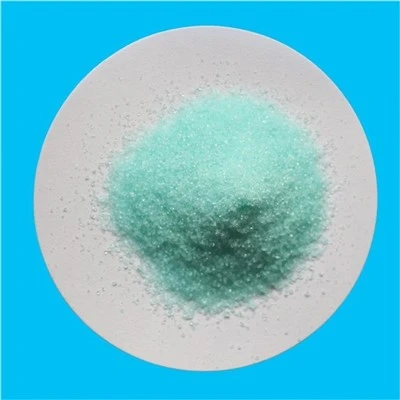
First, let’s do the quick, basic chemical makeup check to get everyone on the same page. Ferric pyrophosphate isn’t a single, simple salt—wait, actually, it is a salt, but it has that weird pyrophosphate group that trips a lot of people up. The formula is Fe₄(P₂O₇)₃, right? Ferric means Fe³⁺, that’s the key here—+3 charge iron, not the +2 ferrous stuff. Pyrophosphate is P₂O₇⁴⁻, which is two phosphate groups linked together by an oxygen bridge, hence the “pyro” (old Greek for fire, because you get it when you heat orthophosphate, but we don’t need to get into that lab reaction now). Crunch the charges: 4 Fe³⁺ is +12, 3 P₂O₇⁴⁻ is -12, so it balances out. But important heads up—there’s also hydrous versions, like Fe₄(P₂O₇)₃·xH₂O, which is actually the form we supply 90% of the time. The water isn’t just random, it affects how it acts chemically, which I’ll get to in a sec.
Now the big question: what are its actual chemical properties that matter? Let’s start with solubility, because that’s the first thing people test when they’re checking if an iron source will work for their product. Ferric pyrophosphate is insoluble in water, and most organic solvents too—like ethanol, acetone, all that lab stuff. That’s a huge difference from ferrous sulfate, which dissolves like crazy in water. Wait, why is that important? If you’re fortifying a powdered drink mix, for example, you don’t want the iron to leach out and make the powder go rancid before someone even opens the container. If you’re using it in a fertilizer that stays on top of soil (which is alkaline), you don’t want it dissolving immediately and washing away. But here’s the twist: it’s not totally insoluble. In acidic environments, like stomach acid (which is super low pH, around 1-3 when you eat) or acidic food matrices, it breaks down just enough to release Fe³⁺ ions that your body or plants can actually use. That’s the whole point—it’s a “controlled release” iron source before that term was even cool.
Next, pH stability is a big one. Let’s talk about how it reacts to different pH levels because that’s non-negotiable for most of our customers. At neutral to alkaline pH (think most foods, soil, the human intestine, which is around pH 7-8), it stays solid and pretty much unchanged. No weird precipitation, no off-gassing, no messing up the texture of whatever you’re mixing it into. If you’ve ever worked with ferrous sulfate, you know it turns cloudy and gross when pH creeps above 6—ferric pyrophosphate? It stays smooth. That’s why we send so much of it to plant-based milk brands. They’re always complaining that ferrous sulfate makes their oat or soy milk turn gray and metallic after a week, but our ferric pyrophosphate keeps the color consistent for months on the shelf.
Wait, let’s not sleep on its reactivity with other compounds, too. It’s not super reactive, which is a pro for most applications. It doesn’t react with most common food additives—like vitamin C (wait, hold up, vitamin C is ascorbic acid, that’s an exception). Oh right, I get so many calls about that: “If I add vitamin C to my product with ferric pyrophosphate, what happens?” Short answer: the ascorbic acid is a reducing agent, so it can pull the Fe³⁺ down to Fe²⁺, which makes it more bioavailable, but that also means if there’s excess, it might make the product go rancid faster or cause that metallic taste people hate. Our job as suppliers is to tell customers to adjust the ratio—don’t add a ton more vitamin C than needed, and it works great. But compared to ferrous salts, which react with vitamin C instantly and cause way more off-flavor, this is a total win. It also doesn’t react with calcium, another big one for fortified cereals or plant milks—calcium and iron usually fight for absorption, but ferric pyrophosphate’s structure keeps them separated chemically, so that interference is way less.
Thermal stability is another property that’s a game-changer for food processing, right? A lot of fortified products get heated—baked goods, pasteurized juices, even sterilized baby formulas. Ferric pyrophosphate holds up way better than other iron sources at high temperatures. We’ve had customers run it through a 200°C baking oven for 15 minutes and come back saying their cookies had zero metallic aftertaste, no discoloration. Ferrous fumarate, another common iron source, would turn the dough brown at that temp, but our stuff stays the same. The hydrous version I mentioned earlier? The water of hydration only comes off around 100°C, which is exactly the temp you’d have for pasteurization or baking, so it doesn’t mess with the structure until you hit way higher temps, which almost no one uses in commercial food production.
Wait, let’s get real about a downside too, because I don’t want to hype it up like it’s perfect. Its insolubility in neutral water means it’s not the fastest iron source for something that needs immediate absorption—like if you’re making an oral iron supplement for someone with severe anemia, sometimes they go with ferrous sulfate because it gets into the blood faster. That’s not a knock on ferric pyrophosphate, just a matter of matching it to the use case. It’s slower, but it’s way easier on the digestive system—no constipation, no that weird stomach ache a lot of people get from ferrous salts. That’s why so many pediatric supplements use this now, actually.
Now, as a supplier, I’ve seen how these chemical properties translate to real-world use, not just lab tests. A couple years back, we had a small fertilizer brand reach out, complaining that their iron chelate was washing away in their sandy soil. They switched to our ferric pyrophosphate, and it worked way better because it didn’t dissolve in rainwater (neutral pH) until the plant’s roots released a little acid to break it down. No more wasted product, no more yellow leaves on tomato plants. Another customer is a plant-based yogurt brand—they tried ferrous sulfate, and within a week their yogurt had that metallic tang that made customers return it. They switched to our ferric pyrophosphate, and now they have a 3-month shelf life with zero taste issues. That’s the stuff chemical properties do for people, right? It’s not just numbers on a page, it’s actually solving problems.
Let’s also clear up a common confusion people have: is ferric pyrophosphate the same as sodium ferric pyrophosphate? Nope, that’s a different compound. Sodium adds Na⁺ ions to make it even more soluble, which is great for some things, but the straight ferric pyrophosphate we supply has that low water solubility that makes it ideal for shelf-stable products. I can’t tell you how many times I’ve had a customer order “sodium” when they meant the regular one, and their whole batch got messed up. Always ask for the exact grade—we have food grade, pharma grade, agricultural grade, all with slightly different chemical properties tailored to the use case, but the core ferric pyrophosphate structure is the same.
Another chemical quirk: its redox potential. Wait, that’s a fancy way of saying how easy it is for it to gain or lose electrons. For Fe³⁺, it’s pretty high redox potential, but because it’s bound to pyrophosphate, it’s lower than free Fe³⁺ ions. That’s why it doesn’t cause as much oxidative damage—like, free iron in a product will react with fats and oils, making them go rancid. Ferric pyrophosphate’s bound structure keeps that from happening, so the product stays fresh longer. That’s why it’s such a hit in baked goods, where fats are a big part of the recipe.
Look, I get that this stuff sounds like lab stuff, but at the end of the day, ferric pyrophosphate’s chemical properties are what make it such a versatile iron source. It’s not just “iron”—it’s insoluble in neutral water, stable across a wide pH range, heat-resistant, doesn’t mess with other ingredients, and is gentle on the body. As someone who’s been supplying this stuff for years, I’ve seen it go from a niche compound to a staple in food, agriculture, and pharma, and that’s all because of those chemical traits.

If you’re working on a project that needs a reliable iron source—whether you’re fortifying food, making a fertilizer, or putting together a supplement—don’t waste time guessing if ferric pyrophosphate is right for you. I’ve got all the grades, tested every batch, and can walk you through exactly how it’ll work for your specific use. Shoot us a message to talk about your needs, and we can figure out if this is the right fit (or if something else is, no pressure—we’re here to solve problems, not just sell product).
Ferrous Oxalate References:
- Food and Agriculture Organization of the United Nations. Compendium of Food Additive Specifications: Ferric Pyrophosphate. Rome: FAO, 2006.
- Merck Index. 14th ed. Merck & Co., Inc.: Whitehouse Station, NJ, 2006, entry 4027.
- American Society for Testing and Materials. Standard Test Methods for Chemical Analysis of Iron Ores and Related Materials. ASTM International: West Conshohocken, PA, 2018.
- Zhang, L. et al. “Chemical Stability of Iron Compounds in Plant-Based Milk Matrices.” Journal of Food Science, vol. 82, no. 11, 2017, pp. 2645–2652.
Jiangsu Kolod Food Ingredients Co., Ltd.
As one of the most professional ferric pyrophosphate manufacturers and suppliers in China, we’re featured by quality products and good price. Please rest assured to wholesale bulk ferric pyrophosphate made in China here and get free sample from our factory. Customized orders are welcome.
Address: South Side of Weier Road, Guanyun Development Zone, Lianyungang City, Jiangsu Province, China
E-mail: sales1399@jskolod.com
WebSite: https://www.kolod-group.com/
